

Get your free B2B Tech & SaaS Website Evaluation PEP Framework
A practical evaluation framework designed for B2B tech and SaaS startups and SMEs. Use it to plan your first website or improve an existing one with clarity and direction.
- 36 pages of actionable guidelines, structured checklists, resources, and evaluation signals for relevant web elements
- A methodical framework built around three core pillars used in real B2B website strategy and delivery
- Over 160 examples with screenshots and common mistakes pulled from actual B2B tech and software websites
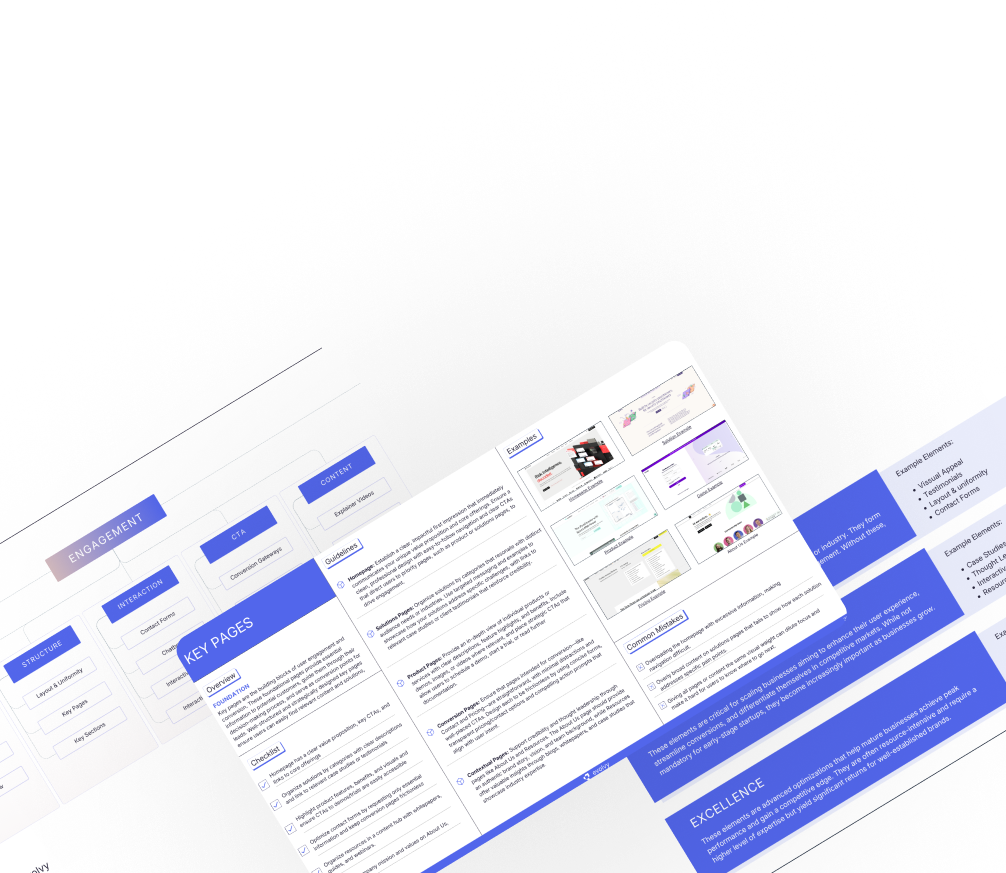
Table of Contents
Why B2B Tech & SaaS Websites Are Harder Than Ever to Get Right
B2B tech and SaaS buying has changed. Today, most buyers research, compare, and evaluate solutions online long before they speak to sales.
That means your website is no longer just a marketing asset. It is a decision-making tool.
Modern B2B websites need to:
Communicate value clearly to multiple stakeholders
Build trust in complex and high-consideration markets
Support long sales cycles with credible, useful information
Strong visuals and good design still matter. They play a key role in perceived value and first impressions. But design alone is no longer enough.
Without clear structure, intent, and performance considerations, even well-designed websites can struggle to engage the right audience or support real business outcomes.
The challenge for most B2B teams is not effort or ambition. It is the lack of a clear, structured way to evaluate what actually works.
Where Most Website Advice Falls Short
Most website guidance is built for broad audiences. It often focuses on surface-level best practices, isolated metrics, or trends that do not translate well to B2B tech and SaaS businesses.
This creates common problems:
Advice that ignores complex buying journeys
Checklists that separate design, content, and performance
Decisions driven by assumptions, trends, or competitor imitation
For startups and SMEs, this usually leads to trial and error. Websites evolve without a consistent framework, making it hard to understand what to prioritize or how different elements work together.
What is missing is not more inspiration. It is a shared evaluation lens.
One that helps teams assess websites based on how well they communicate value, engage the right audience, and perform as a reliable business asset.
The PEP Website Evaluation Framework
The PEP Framework evaluates B2B tech and SaaS websites through three core pillars, each broken down into specific, actionable elements.
- Perceived Value
Focuses on how credible, clear, and trustworthy your website feels at first impression. This pillar evaluates design quality, brand and product messaging, social proof, and authority signals that influence buyer confidence early on. - Engagement
Examines how effectively your website guides users and supports decision making. It covers navigation and structure, user interaction, calls to action, content clarity, and how information is presented across the journey. - Performance
Assesses how well the website functions as a business asset. This includes technical performance, usability and functionality, and conversion rate optimization, ensuring the site supports growth rather than holding it back.
Together, these pillars create a structured and repeatable way to assess what actually matters on a B2B website.
Who This Framework Is For
The PEP Framework is built specifically for B2B tech and SaaS companies, at different stages of growth.
It is especially useful for:
Startups planning their first website and needing a clear strategic foundation
SaaS and tech teams with an existing site that is not converting or scaling
Founders and decision makers who want clarity before investing in redesigns
Marketers and designers looking for a structured evaluation system
Whether you are starting from zero or refining what you already have, the framework adapts to your current level of maturity.
What’s Included in the PEP Framework
This is not a high level overview or generic checklist. The framework is designed to be used.
Inside, you will find:
36 pages of structured evaluation criteria across all pillars and elements
Clear guidelines and checklists for each website component
Over 100 real world examples with screenshots from B2B tech websites
Common mistakes explained so you know what to avoid and why
Evaluation signals to help you assess quality, clarity, and effectiveness
Everything is organized to help you make confident decisions, without relying on guesswork or trends.